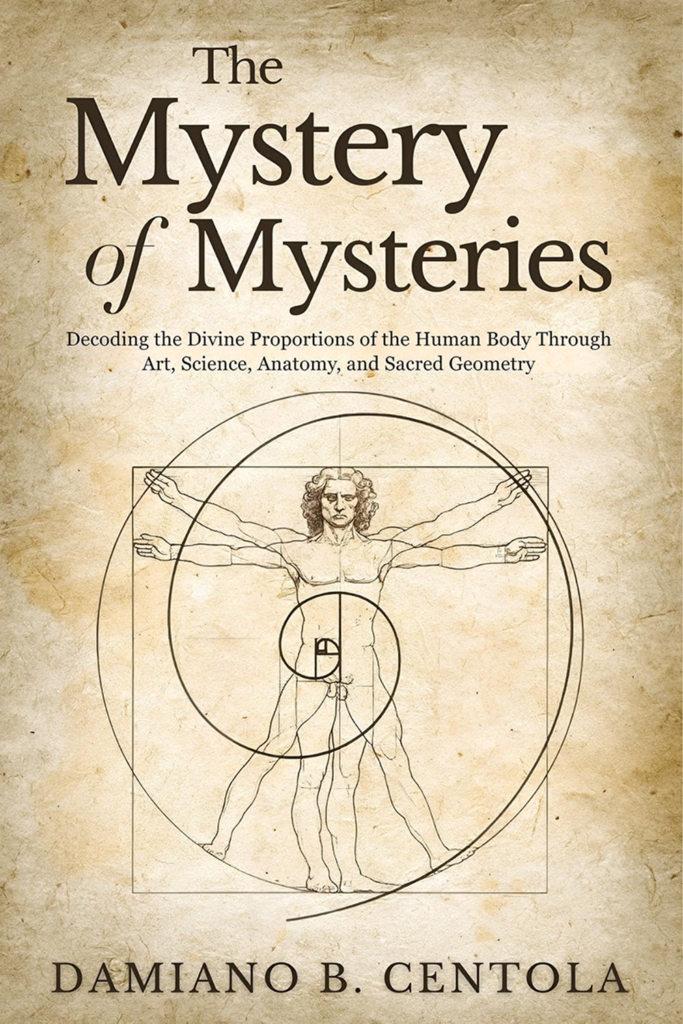
Damiano B. Centola examines Leonardo da Vinci’s Vitruvian Man as a meeting point between the human body, sacred geometry, art, and Christian theology. The book interprets the figure’s circle, square, and bodily proportions through biblical images and ideas about the body as a temple and a reflection of divine design.
The book’s central idea gives it a clear organizing thread. Centola draws connections between anatomy and spiritual symbolism, inviting readers to see familiar features of the body—such as the navel, spine, and outstretched arms—in a new light. Readers interested in Christian reflection and sacred art may find the imaginative interpretations engaging.
Centola writes with conviction and uses short sections, scripture references, and recurring images to make the book approachable. The subject also lends itself to visual thought: the Vitruvian figure becomes a framework for exploring the relationship between body, spirit, and faith.
The book’s main limitation is that its interpretations can become repetitive, and it sometimes moves quickly from anatomical or mathematical observations to theological conclusions. A note near the end clarifies that the diagrams are symbolic models rather than universally precise measurements, but readers seeking a rigorous scientific study may want more distinction between evidence and metaphor.
The Mystery of Mysteries offers an imaginative, faith-centered reading of the human form and da Vinci’s famous drawing. Its symbolism will appeal most to spiritually minded readers, while its repetitive style and interpretive approach may limit its reach for others.